
The rest of the week we mostly did our regular routine. The weather was really nice and we are enjoying temperatures in the 60s and 70s during the day. We talked to all the grandkids, we went to church (all German this time, but we’re getting bits and pieces), we bought tickets for some future concerts and planned a November trip to Berlin.
On that topic, for cities that we have visited in the past, we’re taking the approach of visiting for an event, instead of just because. So we are on the lookout for concerts, festivals, or other things that might make a return trip more worth the travel.
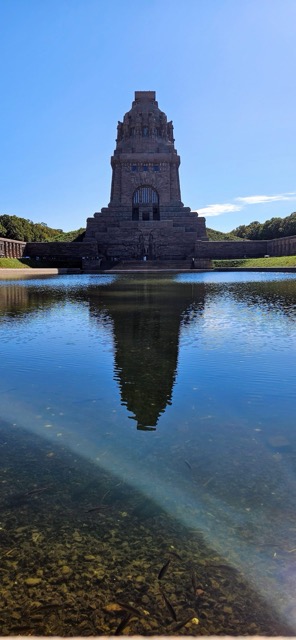
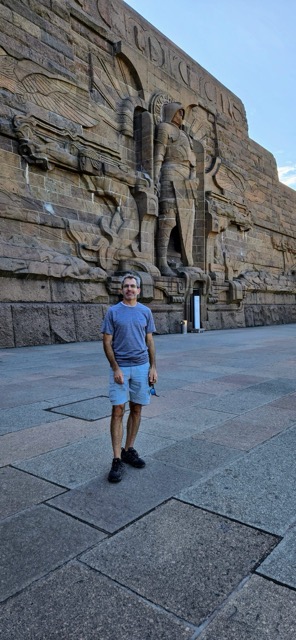
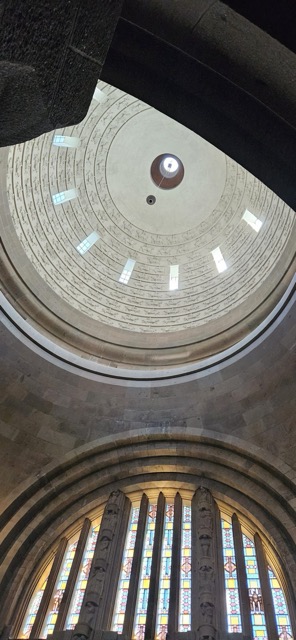
We played tourist in our own town on Thursday. We took the tram to the Völkerschlachtdenkmal (Monument to the Battle of the Nations). In 1813, a joint effort by armies from Prussia, Russia, Austria, and Sweden defeated Napoleon’s army at the Battle of Leipzig. It was the largest battle fought up to that point in history and remained so until WWI. The battle was a turning point and the beginning of the end of Napoleon’s quest to own Europe. There is an absolutely massive monument built on the site of the former battlefield. It was built at the beginning of the 20th century, became a favorite site for Hitler speeches, and then grudgingly allowed to remain during the East German era. It’s kinda cool, but as with most battle monuments, kinda depressing. The only inspirational part was the sheer determination of the people of Leipzig to build and then restore the thing.
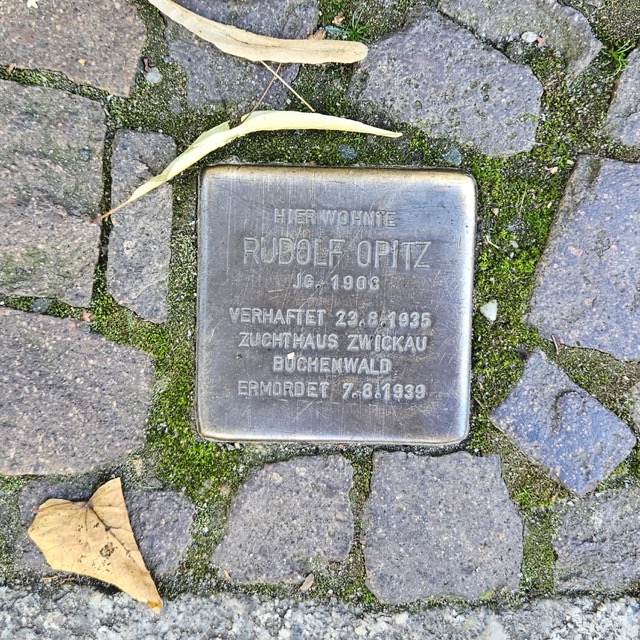
One thing about Germany (and some other European countries) that I wanted to share is the Stolpersteine, or stumbling stones. As a memorial to the many people who were unjustly arrested or sent to concentration camps, small brass bricks have been placed in the pavement near where they last lived or worked. Sometimes there will be a whole cluster of them signifying a family. The one that I have included here is in our neighborhood. It reads “Hier wohnte Rudolf Opitz” or “Here lived Rudolf Opitz”. It includes the date he was arrested, the camp he was sent to, and the date he died. It is a remembrance for each one of those who were unjustly executed and another way that Germany has refused to turn its back on their painful history and have tried to make amends.
I compiled some of our travel memories for the month into a video. If you choose to watch, I hope you enjoy coming along on some of our adventures! I appreciate that you are with us for even a part of it…the distance doesn’t seem as great when I think that some of you are experiencing some of this crazy experiment. Have a great week!
Loved the video! You both look relaxed and happy.